
Wall object "Gloriosa" (2025) (Unique piece)
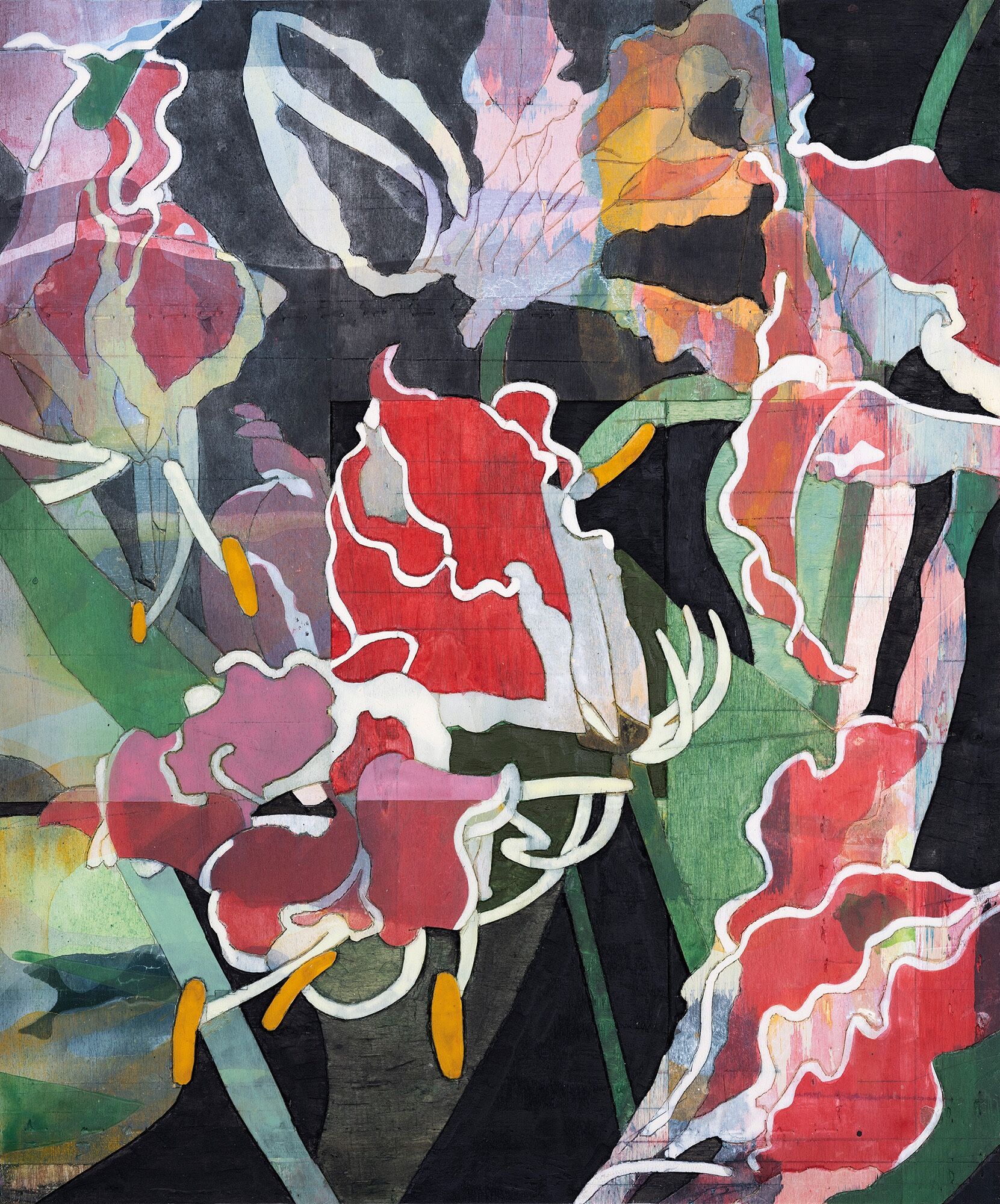


Wall object "Gloriosa" (2025) (Unique piece)
Quick info
unique piece | signed | pigment on wood | unframed | size 60 x 50 cm
Detailed description
Wall object "Gloriosa" (2025) (Unique piece)
This work is inspired by snapshots from Japanese and Chinese cities or still life motifs, as seen in the present work "Gloriosa". There is a wild blossoming, a subtle smouldering that permeates this canvas: Gloriosa - the flame lily - as the protagonist of a flickering colour spectacle that oscillates between botanical meticulousness and painterly abstraction. Waschkau transforms the most classical of motifs, the flower, into a visual conundrum.
Pigment on wood, 2025. Signed. Size: 60 x 50 cm.
Producer: ARTES Kunsthandelsgesellschaft mbH, Bödekerstraße 13, 30161 Hannover, Deutschland, E-Mail: [email protected]
About Detlef Waschkau
Detlef Waschkau was born in 1961. He transfers everyday urban life into artistic works made of wood and paint, thus blurring the boundaries between painting and sculpture. He is inspired by scenes from Berlin as much as by snapshots from Japanese or Chinese cities, where he spent several working stays.
Using the material wood, Waschkau elaborately works house facades, people hurrying through the streets and close-ups of passers-by that seem to have been taken surreptitiously. He colours the reliefs sparingly and breaks them up with lines and areas of colour to create the impression of collages. In this way, Waschkau creates sensitive compositions in which the wood is both material and motif.
A one-of-a-kind or unique piece is a work of art personally created by the artist. It exists only once due to the type of production (oil painting, watercolour, drawing, lost-wax sculpture etc.).
In addition to the classic unique pieces, there are also the so-called "serial unique pieces". They present a series of works with the same colour, motif and technique, manually prepared by the same artist. The serial unique pieces are rooted in "serial art", a genre of modern art that aims to create an aesthetic effect through series, repetitions, and variations of the same objects or themes or a system of constant and variable elements or principles.
The historical starting point is considered to be Claude Monet's "Les Meules" (1890/1891), where, for the first time, a series was created that went beyond a mere group of works. The other artists, who addressed to the serial art, include Claude Monet, Piet Mondrian and above all Gerhard Richter.