Christo & Jeanne Claude: 30 years of wrapping the Reichstag
June 2025 marks the 30th anniversary of the wrapping of the Reichstag in Berlin. In June 1995, the wrapping of the Reichstag attracted international attention. To mark the occasion, the Reichstag was illuminated with a light installation for twelve nights.
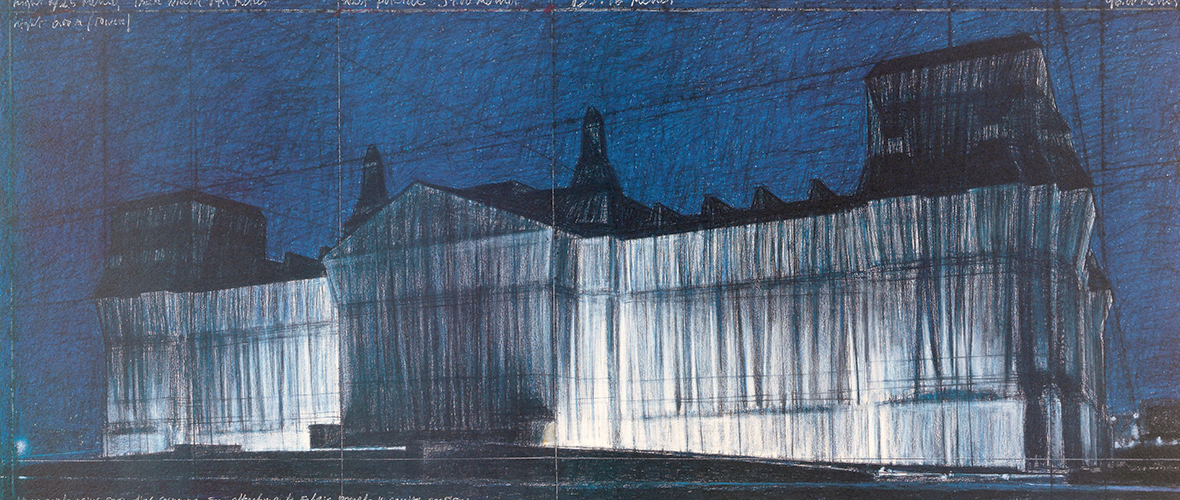
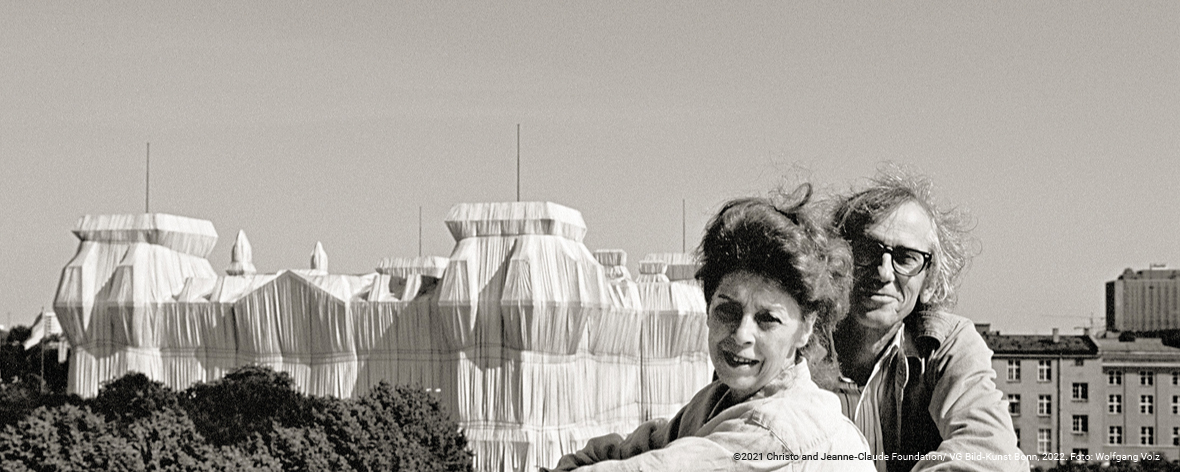
For almost 23 years, object artists Christo and Jeanne Claude pursued their idea for ‘Wrapped Reichstag, project for Berlin’ until it finally came to fruition: in June 1995, the wrapping of the Reichstag not only marked the beginning of Berlin's summer fairy tale, but also attracted international attention.
June 2025 marks the 30th anniversary of the wrapping. To mark the occasion, the Reichstag will be illuminated with a light installation for twelve nights starting on Whit Monday, 9 June.
From 9:30 p.m. to 1 a.m. each night, the entire west façade of the Reichstag building will be wrapped in a silvery glow.

Success by a narrow margin
The wrapping of the Reichstag building by Christo and Jeanne-Claude was one of their most ambitious projects. The idea originated in the 1970s, but its implementation required lengthy planning and numerous approval procedures. Christo was known for his large-scale artworks, in which he wrapped buildings, landscapes or objects in fabric to show them in a new light.
The biggest challenge in this impressive project was not the technical implementation, but rather convincing opponents and obtaining the necessary permits. Between 1992 and 1994, the artist couple held talks with around 400 members of parliament to get them excited about their idea. The project met with mixed opinions within the Bundestag and sparked controversial discussions. While Chancellor Helmut Kohl was one of the most vocal opponents, Bundestag President Prof. Dr. Rita Süssmuth was among the early supporters of the project.
The final decision was extremely close: on 25 February 1994, the Bundestag approved the wrapping of the Reichstag building by 292 votes to 223.
The implementation
Once permission to wrap the building had been granted, Christo and Jeanne-Claude immediately set to work.
Numerous people were involved, including the artist couple themselves, a team of helpers, engineers, architects, authorities and licensing agencies, who made the implementation possible.
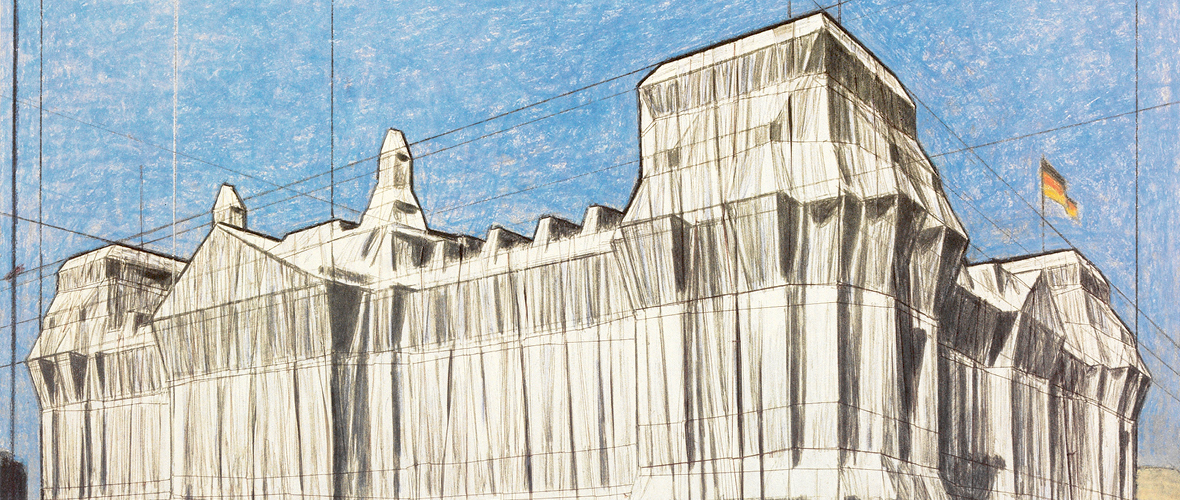
A special, robust fabric was used for the wrapping, which emphasised the historical character of the building while achieving the desired visual effect. The fabric was a silvery grey and was carefully stretched around the building to highlight its contours and architectural details.
It took 100,000 square metres of polypropylene fabric, 15,600 metres of blue polypropylene rope and 200 tonnes of steel for the substructure. Christo and Jeanne-Claude deliberately decided not to use cranes; instead, 80 climbers were recruited to attach the material.
A Berlin summer in 1995
In June 1995, the moment had finally arrived: when the wrapping was finally presented to the public, there was no trace of the criticism that had been expressed beforehand.
Instead, a special atmosphere prevailed in front of the Reichstag: the mood was characterised by excitement, pride and a certain awe for the historic building.
Thousands of people gathered to admire the artwork. Depending on the time of day and the angle of the light, the colour of the covering changed, and the fabric moving in the wind drew attention to previously unnoticed details of the building.
The Reichstag, with its long and difficult history, was symbolically cleansed of its dark chapters through art. Both at home and abroad, the covering was seen as a symbolic gesture for reunification and the newly won democracy, as a powerful symbol of an open, creative and democratic society in Germany.
Reception
The wrapping helped strengthen Germany's image abroad as an innovative, open country that is willing to reflect on its past while looking ahead to the future.
Concerns about the cost proved unfounded: as with all their projects, the artist couple covered the total cost of $15 million themselves in order to be able to work independently.
The artist couple Christo and Jeanne-Claude realised further impressive projects in the following years. Among their best-known works are the ‘Floating Piers’ on Lake Iseo in Italy, ‘The Gates’ in New York City, the ‘Wrapped Coast’ in Australia and the ‘Surrounded Islands’ in Miami.
Jeanne-Claude died in New York in 2009, and her husband Christo completed further projects until his death in 2020 at the age of 84. Their shared vision of creating art as a fleeting but significant experience has had a major influence on contemporary art and remains unforgotten even after the couple's death.
Editions by Christo and Jeanne-Claude
Christo and Jeanne-Claude financed their projects mainly through the sale of sketches, collages and models of their artworks.
These editions give us a direct insight into the creative working methods of the artist couple and document the creation of their famous installations. They are highly prized collector's items that preserve a piece of the temporary art projects.


The anniversary of the wrapping at ARTES Berlin
Our gallery ARTES Berlin will celebrate the anniversary of the wrapping with an exhibition in September.
As part of this, we will present works by Christo and Jeanne-Claude alongside works by Marion Eichmann that deal with the Reichstag.
You will receive information about this event in good time via our → newsletter.